
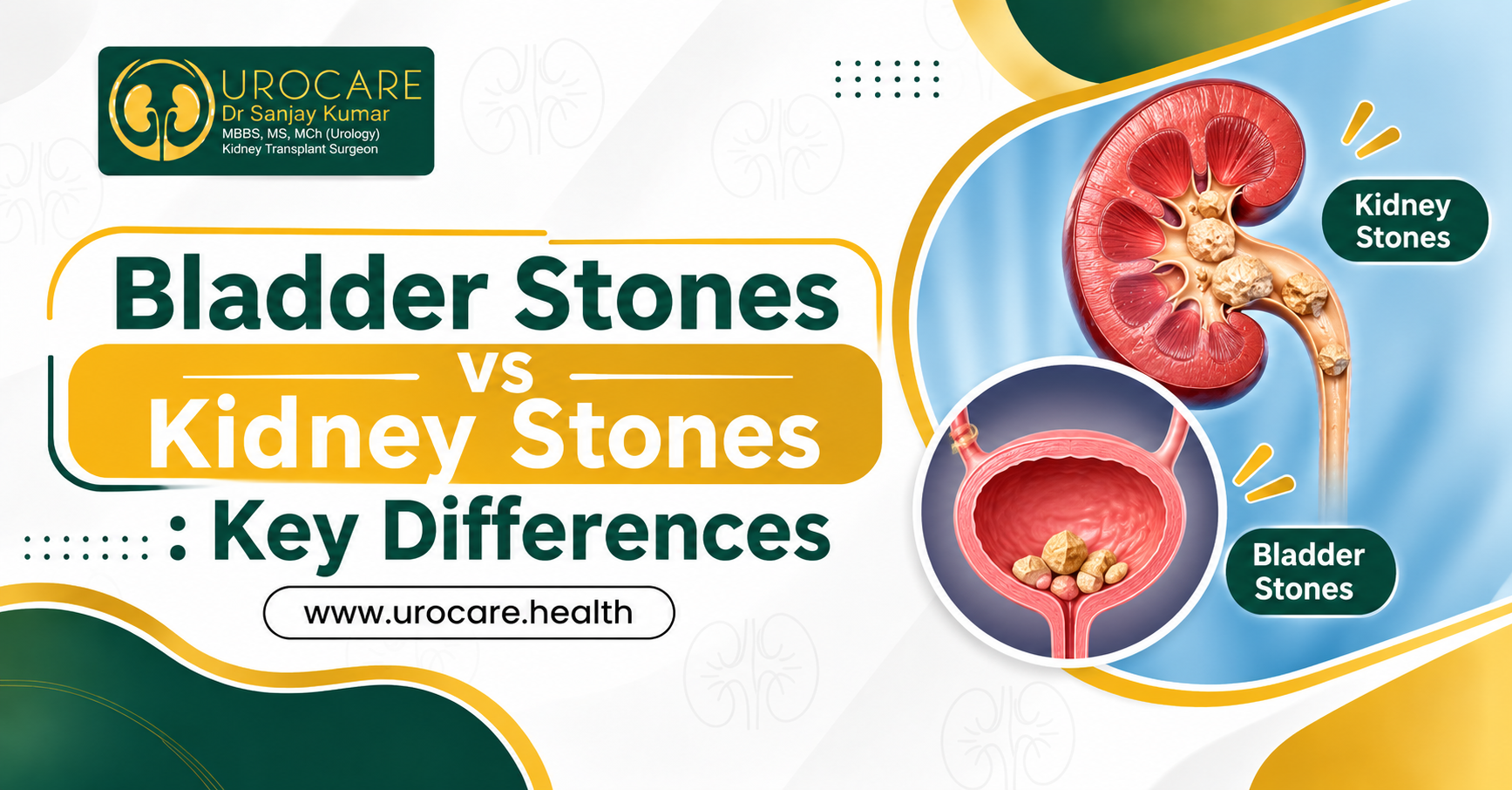
Bladder Stones vs Kidney Stones: Key Differences
If you’ve ever had a sudden, sharp pain in your lower belly or back, your first thought might be “stones.” But which kind? Bladder stones and kidney stones sound alike, and plenty of people use the terms interchangeably. They are not in the same condition. They form in different places, cause different symptoms, and often need different treatment.
In this blog, we’ll break down Bladder Stones vs Kidney Stones key differences plain language so you know what to watch for and when to see a doctor.
What Are Kidney Stones?
Kidney stones are hard deposits made of minerals and salts that form inside your kidneys. When urine becomes concentrated, substances like calcium, oxalate, uric acid, and cystine can clump together and crystallise. Over weeks or months, these crystals grow into stones.
Some stones are tiny, like a grain of sand, and pass without you noticing. Others grow larger and get stuck as they travel down the ureter, the narrow tube connecting the kidney to the bladder. That is when the trouble starts.
What Are Bladder Stones?
Bladder stones form in the bladder itself. They usually develop when urine stays in the bladder for too long and doesn’t empty completely. The leftover urine becomes concentrated, minerals crystallise, and stones slowly build up.
Bladder stones are more common in men, especially those with an enlarged prostate. They can also develop in people with bladder infections, nerve damage affecting bladder function, or a urinary catheter.
Bladder Stones vs Kidney Stones: The Core Differences
- Location: Kidney stones form in the kidneys and may move into the ureter. Bladder stones form and stay in the bladder.
- Cause: Kidney stones are mostly linked to dehydration, diet, metabolic issues, and family history. Bladder stones are mostly linked to incomplete bladder emptying, prostate enlargement, infections, and bladder abnormalities.
- Who gets them: Kidney stones affect men and women of all ages, though they are common between 20 and 50. Bladder stones are far more common in older men.
- Size: Kidney stones can range from tiny to very large, including “staghorn” stones that fill the kidney. Bladder stones are often larger because they have more room to grow and don’t pass easily.
- Ability to pass naturally: Small kidney stones often pass with fluids and medication. Bladder stones rarely pass on their own and usually need to be removed.
Symptoms: How Do They Feel Different?
This is where many people get confused, because some symptoms overlap. Here’s how to tell them apart.
Kidney Stone Symptoms
- Severe, wave-like pain in the side or back, below the ribs
- Pain that spreads to the lower abdomen and groin
- Blood in the urine (pink, red, or brown)
- Nausea and vomiting
- Burning during urination
- Frequent urge to urinate
- Fever and chills if infection is present
The pain from a kidney stone is often described as one of the worst a person can experience. It comes and goes in waves as the stone moves.
Bladder Stone Symptoms
- Lower abdominal pain or pelvic discomfort
- Difficulty starting urination or a weak, interrupted stream
- Pain or burning while passing urine
- Frequent urination, especially at night
- Blood in the urine
- Cloudy or dark urine
- In men, pain in the penis or testicles
A telling sign of a bladder stone is a urine stream that suddenly stops mid-flow and then starts again after you change position.
How Are They Diagnosed?
Because symptoms overlap, a proper evaluation matters. A urologist will usually start with your medical history and a physical exam, then recommend tests such as:
- Urine tests to check for blood, infection, and crystals.
- Blood tests to assess kidney function and mineral levels.
- Ultrasound to detect stones without radiation.
- CT scan (non-contrast) for the most accurate view of stone size and location.
- X-ray (KUB) to spot certain types of stones.
If you experience recurring urinary symptoms or unexplained abdominal pain, consulting an experienced urologist in Jaipur can help identify the underlying cause. Accurate diagnosis is important because kidney and bladder stones may require different treatment approaches.
Never guess based on symptoms alone. Self-treating the wrong condition can delay care and risk complications.
Treatment: What Are Your Options?
The right treatment depends on the stone’s size, location, type and effect on urinary function. Modern kidney stone treatment in Jaipur includes several minimally invasive approaches that can help patients avoid traditional open surgery in many cases.
Treating Kidney Stones
The right approach depends on stone size, location, and how much it’s affecting you.
- Observation and fluids: For small stones, often under 5 mm, doctors may recommend monitoring, pain relief and medication to help the stone pass naturally.
- ESWL (Shock Wave Lithotripsy): Uses focused shock waves to break stones into smaller fragments that can pass through urine.
- Ureteroscopy with Laser Lithotripsy (URS/RIRS): A thin scope reaches the stone, and laser energy is used to fragment it.
- PCNL (Percutaneous Nephrolithotomy): A minimally invasive procedure generally recommended for large or complex kidney stones.
Treating Bladder Stones
Since bladder stones rarely pass on their own, treatment usually involves removal.
- Cystolitholapaxy: A scope is passed through the urethra, and the stone is broken using laser or ultrasound energy before the fragments are flushed out.
- Open or Laparoscopic Surgery: May be considered in selected cases involving very large stones.
- Treating the Root Cause: Addressing conditions such as an enlarged prostate helps reduce the risk of recurrence.
If you ignore bladder stones, they can cause recurrent infections, bladder damage, and persistent bleeding.
Looking for Kidney Stone Treatment in Jaipur?
Choosing the right specialist is important when dealing with kidney or bladder stones. Modern techniques such as laser lithotripsy, RIRS and PCNL offer effective treatment options depending on the size and location of the stone.
Dr. Sanjay K Binwal, an experienced kidney stone specialist in Jaipur, practises at ETERNA-Women & Urology Clinic. He focuses on accurate diagnosis, appropriate treatment planning and patient-friendly care for kidney stones, bladder stones and other urological conditions.
Patients searching for a urologist in Mansarovar Jaipur can consult Dr. Sanjay K Binwal for evaluation of urinary symptoms, stone-related problems, prostate conditions and other urological concerns. The treatment approach is selected according to the patient’s condition and medical requirements.
When Should You See a Doctor?
Don’t wait it out if you notice any of the following:
- Severe pain in your back, side, or lower abdomen that doesn’t ease.
- Blood in your urine.
- Fever or chills along with urinary symptoms.
- Nausea and vomiting with pain.
- Inability to urinate or a very weak stream.
- Repeated urinary tract infections.
A stone that blocks urine flow can damage the kidney, so urgent care matters, particularly if fever is involved. Fever with urinary obstruction requires immediate medical evaluation.
How to Prevent Stones
The good news is that prevention is largely within your control. Some daily habits can help reduce the risk of developing kidney stones again.
- Drink enough water: Maintain adequate hydration. Your urine should generally be pale yellow. Fluid requirements may vary depending on your health and activity.
- Cut back on salt: High sodium intake can increase calcium in the urine.
- Limit excessive animal protein: Too much red meat and other animal protein may increase certain stone-forming substances.
- Watch oxalate-rich foods: Foods such as spinach, beetroot and nuts may need moderation in people prone to calcium oxalate stones.
- Don’t avoid dietary calcium: Adequate calcium from food can help bind oxalate in the gut.
- Empty your bladder fully: Avoid holding urine for long periods.
- Treat prostate or urinary problems early: Especially important for men experiencing difficulty emptying their bladder.
- Add citrus: Lemon and other citrus fruits provide citrate, which may help reduce the formation of certain kidney stones.
Final Thoughts
Kidney stones and bladder stones may share a name, but they differ in where they form, why they develop, how they feel, and how they’re treated. Kidney stones usually announce themselves with intense flank pain, while bladder stones tend to show up as urinary trouble and lower abdominal discomfort.
Early diagnosis can make treatment easier and help protect your urinary health. If you experience recurring pain, blood in urine, difficulty urinating or other related symptoms, don’t ignore them.
Book a consultation with Dr. Sanjay K Binwal at ETERNA-Women & Urology Clinic for expert evaluation, accurate diagnosis and appropriate kidney stone treatment in Jaipur.
Frequently Asked Questions
Can a kidney stone turn into a bladder stone?
Yes. A small kidney stone can travel down the ureter into the bladder. If it doesn’t pass out, it may contribute to bladder stone formation, although many bladder stones develop independently due to incomplete bladder emptying.
Which is more painful, a kidney stone or a bladder stone?
Kidney stones typically cause more intense, sudden pain, especially when they move into the ureter. Bladder stones tend to cause ongoing discomfort, lower abdominal pain and urinary problems.
Can bladder stones go away without treatment?
Rarely. Most bladder stones require removal through a procedure such as cystolitholapaxy, particularly when they cause symptoms or urinary obstruction.
Are kidney stones dangerous?
Many small kidney stones pass naturally, but stones that block urine flow or cause infection can threaten kidney health and need prompt medical attention.
How do I find a good urologist near me in Jaipur?
Look for a qualified specialist with experience in endoscopic and laser procedures, clear communication and appropriate treatment planning. Dr. Sanjay K Binwal at ETERNA-Women & Urology Clinic provides urological consultations for patients across Jaipur, including Mansarovar.


