


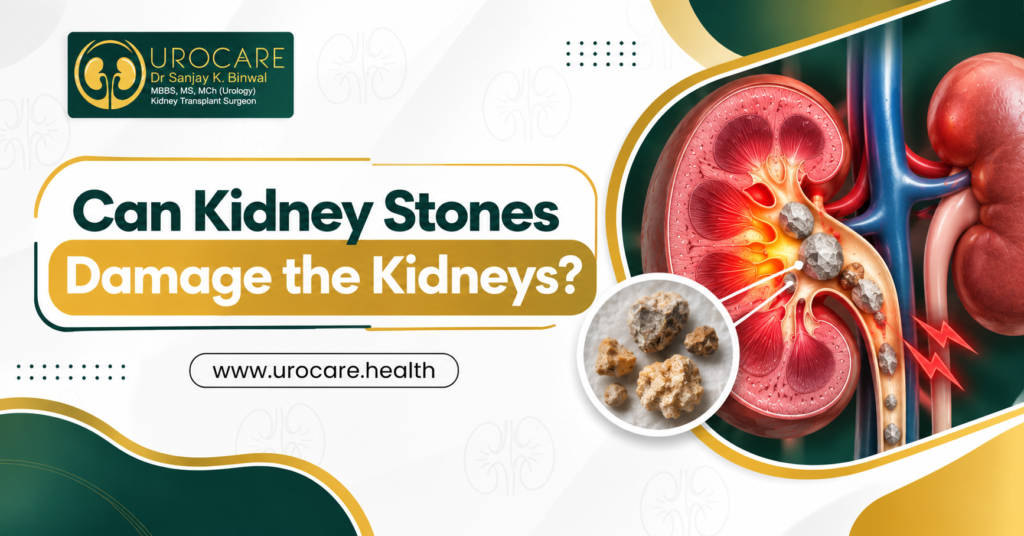
Yes, kidney stones can damage the kidneys, but usually only when they are left untreated. A small stone that passes on its own rarely causes lasting harm. A stone that blocks urine flow, triggers an infection or keeps coming back can slowly injure kidney tissue and reduce how well your kidneys work.
Here is how that damage happens, which signs should not be ignored, and what you can do to protect your kidneys. If you are already in pain or have a known stone, speaking to a Kidney Stone Specialist in Jaipur early can save you a lot of trouble later.
How Do Kidney Stones Damage the Kidneys?
Your kidneys filter waste from your blood and send it down a thin tube called the ureter to the bladder. A stone gets in the way of that drainage system. Whether it causes harm depends on its size, its position and how long it stays there.
1. Blockage and swelling (hydronephrosis)
When a stone blocks the ureter, urine backs up into the kidney and makes it swell. This raises pressure inside the kidney. If the blockage clears quickly, the kidney usually recovers. If it lasts for weeks or months, the pressure can permanently scar the filtering tissue.
2. Infection
Urine that cannot drain becomes a breeding ground for bacteria. A kidney infection on top of a blocked stone is a medical emergency. In serious cases, the infection can spread into the bloodstream (sepsis) or fill the kidney with pus, and either can threaten your life as well as your kidney.
3. Scarring from repeated stones
Every stone episode, and every procedure to remove it, can cause a little inflammation. Over the years, people who form stones again and again may develop scarring that slowly reduces kidney function.
4. Large “staghorn” stones
Some stones grow until they fill the kidney’s central collecting area and take on a branching, antler-like shape. These are often linked to chronic infection and can quietly destroy a kidney over time, sometimes with very few symptoms.
Are Small Kidney Stones Dangerous?
Not usually. Many stones smaller than 5 mm pass with plenty of fluids and medicines that relax the ureter. The pain can be intense, but the kidney typically stays unharmed.
The catch is that pain is not a reliable measure of damage. Some people with a severely blocked kidney feel only a dull ache, while others with a tiny stone are in agony. That is why “it doesn’t hurt much” is not a good reason to skip a scan.
Who Is More at Risk of Kidney Damage?
Some people should be extra careful because their kidneys have less room for error:
- People with only one working kidney
- Those with diabetes, high blood pressure or existing kidney disease
- Anyone with recurrent urinary tract infections
- People with a family history of stones
- Patients who have had stones several times before
- Those who ignore symptoms or delay treatment for months
Warning Signs You Should Never Ignore
Get medical help quickly if you notice any of these:
- Severe pain in the side or back that spreads to the groin
- Fever or chills along with pain, which can point to infection
- Vomiting that will not stop
- Blood in the urine
- Burning or difficulty while passing urine
- Very little or no urine output
- Pain that does not ease even with painkillers
Fever with a kidney stone is a red flag. Do not wait it out at home, and get checked by a Urologist in Jaipur as soon as you can.
Can a Kidney Recover After Stone Damage?
Often, yes, if the blockage is relieved early. Kidneys are resilient, and mild swelling usually settles once urine flows freely again. Recovery gets harder when the obstruction has been there for a long time or infection has set in. Scarred tissue does not grow back, which is why timing matters so much.
How Are Kidney Stones Diagnosed?
A doctor will usually start with your symptoms and history, then confirm the picture with tests:
- Ultrasound to check for stones and kidney swelling
- CT scan (non-contrast) to show the exact size and location of a stone
- Urine tests to look for infection or blood
- Blood tests to see how well your kidneys are working
Metabolic tests may also be advised, especially if you have had stones before, to find out why they form.
Treatment Options That Protect Your Kidneys
Treatment depends on the stone’s size, position and how much it is affecting the kidney.
- Watchful waiting with medicines: Small stones without infection or severe blockage can often be managed with fluids, pain relief and medicines that help the stone pass.
- ESWL (shock wave lithotripsy): Focused shock waves break the stone into fragments that pass in the urine. It suits certain stones of moderate size.
- Ureteroscopy with laser (URS/RIRS): A thin scope goes through the natural urinary passage, and a laser breaks the stone. There is no cut on the body, so recovery is quick.
- PCNL (percutaneous nephrolithotomy): This keyhole procedure is used for large or complex stones, including staghorn stones.
- Drainage first, if infected: When a blocked kidney is infected, doctors often place a stent or a drainage tube first to relieve pressure and control the infection, and remove the stone afterwards.
The right option depends on your case, and the best approach is always the least invasive one that works, not a one-size-fits-all procedure.
How to Prevent Kidney Stones and Protect Your Kidneys
Prevention is far easier than repair. These habits help most people:
- Drink enough water. Aim for enough fluids to pass roughly 2 to 2.5 litres of urine a day. Jaipur’s hot, dry summers make dehydration easy, so drink more when you sweat heavily or work outdoors. Pale yellow urine is a good sign.
- Cut down on salt. Too much sodium increases the calcium in your urine, which encourages stones.
- Do not cut calcium. Dietary calcium from milk, curd and paneer actually helps bind oxalate in the gut. Calcium supplements should only be taken on medical advice.
- Watch high-oxalate foods. If you form calcium oxalate stones, your doctor may suggest limiting spinach, nuts and certain other foods rather than banning them completely.
- Moderate animal protein. Large amounts of red meat and processed meats can raise stone risk.
- Add citrus. Lemon water can help, as citrate in citrus fruits works against stone formation.
- Follow up after a stone. A repeat scan and, if needed, urine tests can catch new stones before they cause trouble.
Choosing the Right Doctor
A good doctor explains your scan in plain language, tells you whether your kidney is affected, and lays out your options honestly, including when waiting is safe. They will also look at why your stones formed, because removing a stone without addressing the cause often means it returns.
For Kidney Stone Treatment in Jaipur, Dr. Sanjay K Binwal at ETERNA-Women & Urology Clinic sees patients with kidney stones and other urinary problems, and helps them understand not only how to clear a stone but also how to keep new ones from forming. An early consultation can make the difference between a simple procedure and a serious complication.
People Also Ask
Can kidney stones cause permanent kidney damage?
Yes, if a stone blocks urine flow for a long time, causes repeated infections or keeps recurring. Timely treatment usually prevents lasting damage.
How long can a kidney stone stay in the kidney before it causes harm?
There is no fixed timeline. Stones sitting quietly inside the kidney may cause no trouble for years, but a stone that blocks the ureter can harm the kidney within weeks. Any stone with fever or severe pain needs prompt attention.
Can kidney stones lead to kidney failure?
It is uncommon, but it can happen with long-standing blockage, repeated infections, large untreated stones or a single functioning kidney.
Do kidney stones always cause pain?
No. Some stones stay silent and are found by accident on a scan, which is why routine check-ups matter if you have a history of stones.
When should I see a doctor for kidney stones?
See one if you have recurring pain, blood in the urine, fever, or a stone that has not passed within a few days. A visit is also wise if you have had stones before.
Final Thoughts
Kidney stones are common, and most are manageable. The danger lies in ignoring them. A blocked or infected kidney needs quick attention, and a stone that keeps returning deserves a proper look at its cause.
If you have symptoms, a known stone or a history of repeated stones, do not wait for the pain to decide for you. Book a consultation with Dr. Sanjay K Binwal at ETERNA-Women & Urology Clinic and get a clear plan to protect your kidneys.